From repeated failures seen on site, unexpected pump breakdowns are rarely minor inconveniences. Entire production lines have been shut down by undersized systems, leading to extensive basement flooding, massive contractor liability, and severe environmental compliance risks. When a critical lifting station fails in a bustling manufacturing plant, the resulting chaos leaves zero room for trial-and-error procurement.
Through extensive field experience, a clear lesson from commercial and industrial projects emerges: selecting a durable pump requires practical engineering foresight, not just hunting for the lowest price tag. In continuous-duty systems, building long-term infrastructure reliability means partnering with manufacturers who prioritize engineering integrity over mass production. The story of Zoeller Pump Company perfectly exemplifies this philosophy. Operating continuously since 1939 with manufacturing facilities in Louisville, Kentucky, USA, this fourth-generation family-owned enterprise emphasizes long-term responsibility, building trust through every unit installed globally, especially in regions with harsh operating conditions.
This guide serves as a practical decision framework. Professionals will gain a clear selection method, a deep understanding of cost versus reliability, vital Vietnam climate considerations, and field-tested installation guidance designed to prevent future catastrophes.
Key Points:
• Proper technical specification prevents the vast majority of operational failures in commercial stations.
• The actual total cost of ownership over ten years drastically outweighs the initial purchase price.
• Tropical climates demand specific heavy-duty material constructions and robust thermal protections.
• Precision installation discipline remains just as critical as the core engineering of the equipment.
• Partnering with manufacturers possessing a verified, long-term legacy ensures crucial parts availability for decades.
Understanding What a Submersible Pump Actually Does in Industrial Systems
Pump failures, including those in industrial wastewater systems, are a significant contributor to unplanned facility downtime in modern manufacturing environments. According to Fluke Corporation’s 2025 industry survey, equipment degradation ranks among the leading causes, resulting in substantial productivity losses and costs that can reach hundreds of millions of dollars weekly across the sector.
Furthermore, improper equipment sizing can significantly shorten a pump’s lifespan by forcing it to operate away from its Best Efficiency Point (BEP). As emphasized in guidelines from the Hydraulic Institute and the U.S. Department of Energy’s “Improving Pumping System Performance” Sourcebook, this leads to increased vibration, excessive wear, cavitation, and higher maintenance requirements.
How Submersible Systems Protect Facility Uptime
In practical industrial settings, a submersible pump operates as an essential safeguard for factory uptime and environmental compliance. These airtight, fully submerged units handle extreme wastewater transfer, manage abrasive solids, and provide continuous flood prevention. Because they sit directly in the liquid, they utilize the surrounding fluid to cool the motor, enabling them to safely process chemically aggressive runoff that would quickly destroy standard surface equipment.
The Gap Between Residential and Industrial Models
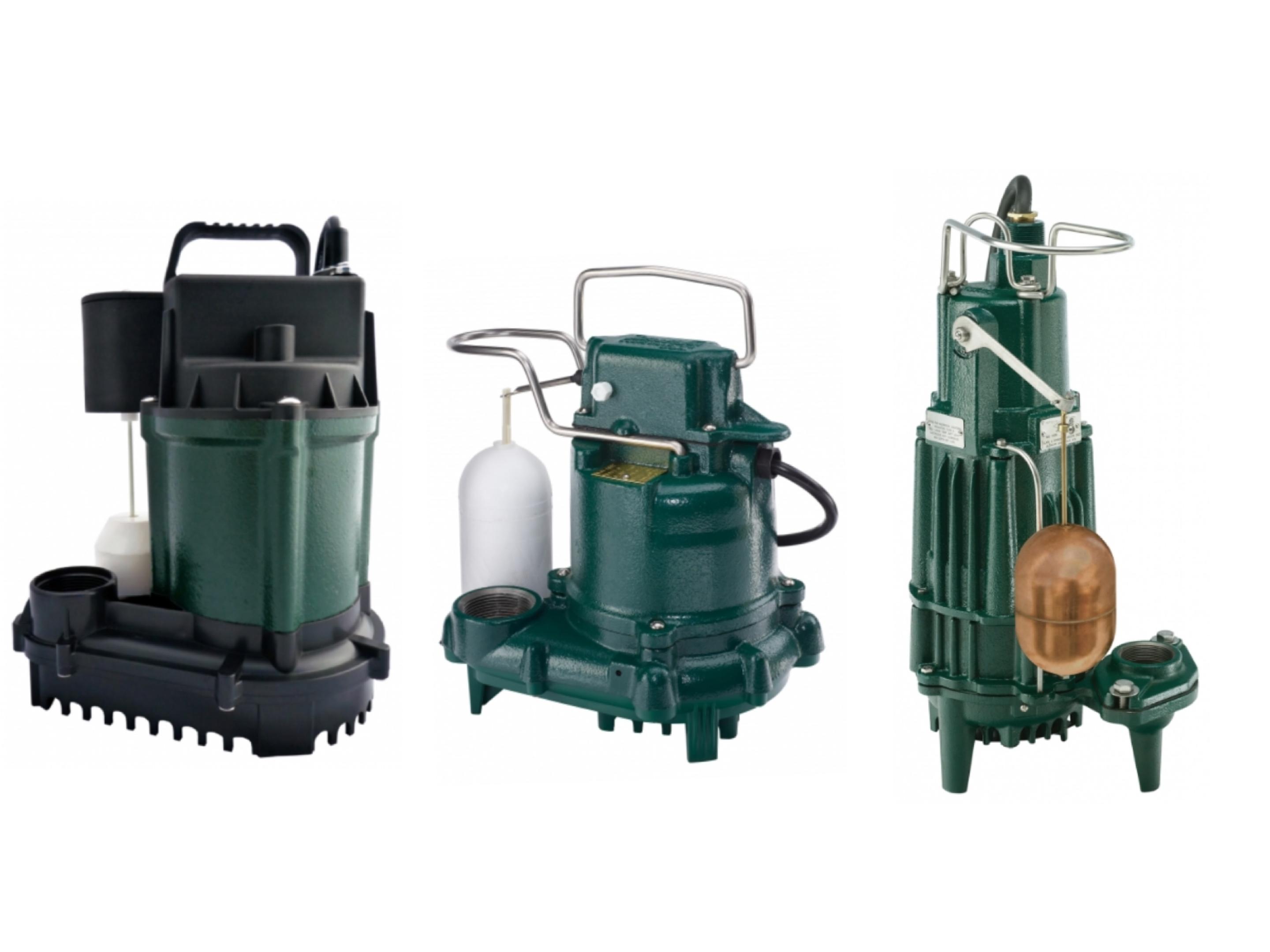
What consistently causes failures on construction sites is confusing a light-duty residential sump pump with a commercial system. E-commerce platforms focused entirely on domestic consumer goods often blur these lines. True industrial models feature continuous duty cycles, oversized bearing assemblies, and advanced impeller designs built specifically to pass a massive max particle size without jamming. Using a domestic unit for commercial applications guarantees an immediate breakdown.
Why Fire Pump Expertise Does Not Equal Wastewater Capability
A pattern that keeps repeating in the field involves assuming all water movement is identical. Specialized fire pump manufacturers design equipment for high-pressure, clean water emergencies. However, moving abrasive sludge or unpredictable sanitary waste requires entirely different engineering. Specialization matters immensely; wastewater requires generous internal clearances and clog-resistant volutes, whereas emergency fire applications focus strictly on maximum pressure generation.
The Three Critical Selection Factors Most Buyers Overlook
The data shows that the actual total cost of ownership for a pumping system over 10–20 years is typically 7 to 10 times the initial purchase price, with the purchase price representing only about 10% of the total lifecycle cost. Energy consumption (approximately 40%) and maintenance (approximately 25%) make up the majority of the remaining expenses, as detailed in the authoritative “Pump Life Cycle Costs: A Guide to LCC Analysis for Pumping Systems”
Total Cost of Ownership vs. Upfront Cost
Facility managers must look beyond transactional pricing models. While high-volume retail platforms offer the lowest sticker price, real-world cost analysis must break down daily energy consumption, minimum required maintenance intervals, and the devastating financial risk of unpredicted downtime. Highly efficient motors drastically reduce electricity bills, completely offsetting premium upfront costs within the first few years of use.
Sizing Correctly for Head Height and Flow Rate
The simplified logic requires calculating the Total Dynamic Head (TDH) the vertical lifting requirements combined with pipe friction loss and matching it to the desired flow rate. Finding the precise “Best Efficiency Point” across different heads prevents rapid short-cycling and motor burnout without getting bogged down in unnecessary, overly complex academic formulas.
Motor Cooling and Duty Cycle in Tropical Climates
Continuous motor cooling remains non-negotiable. In tropical climates, extreme humidity and soaring ambient temperatures severely impact internal insulation and mechanical seal life. Equipment must feature robust thermal overload protection to survive the harsh reality of Southeast Asian environments.
Designing for Vietnam’s Industrial and Construction Conditions
Over years of field work, it becomes clear that material corrosion accelerates up to twice as fast in high-humidity environments compared to temperate zones. Furthermore, unpredictable monsoon flooding dramatically increases peak load demands on municipal and commercial drainage networks.
Material Selection for Chemical Exposure
Dealing with industrial wastewater requires uncompromising material selection. Heavy epoxy-coated cast iron serves as the ideal standard for structural rigidity and vibration dampening. For highly aggressive environments involving seawater or specific chemical runoff, deploying durable marine-grade stainless steel ensures the equipment does not simply dissolve within the pit.
Flood Resilience Planning During Construction
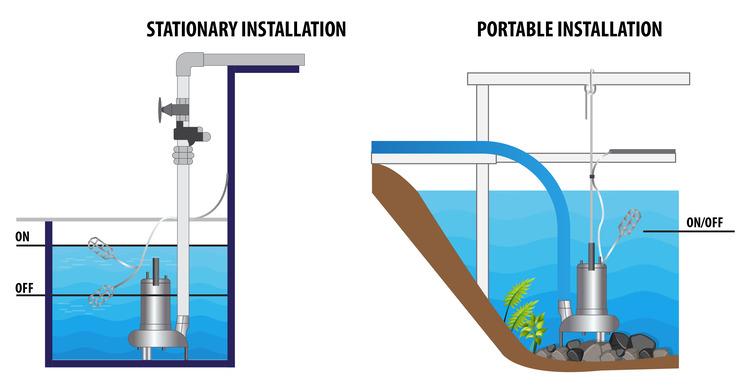
Aggressive flood resilience planning must be implemented during both the construction phase and post-handover. This involves installing heavy-duty backflow prevention check valves to ensure pumped water does not return to the basin, as well as designing duplex stations that offer seamless mechanical redundancy if peak monsoon flows overwhelm a single unit.
The Global Spec Sheet Gap
Many global specification sheets rarely address the specific, punishing realities of the Southeast Asian climate. While some major industrial brands provide extensive documentation for European environments, their standard models often lack the specialized moisture-sensing probes and Class H motor insulation required to survive continuous submersion in Vietnam’s hot, humid conditions.
Installation Planning That Prevents Future Failures
According to a rigorous review published in the Journal of Petroleum Exploration and Production Technology (2021), many premature failures in electrical submersible pumps stem from electrical, mechanical, and operational issues associated with installation, system design, and operation rather than inherent factory defects.
The Pre-Commissioning Checklist
Before a system is ever turned on, a flawless commissioning sequence must be executed. This critical phase includes verifying perfect pipe alignment to reduce vibration, testing local voltage stability, precisely calibrating float switches to prevent dry-running, and ensuring the discharge piping design accommodates the system’s maximum flow capacity.
Ensuring Maintenance Access and Spare Part Planning
Hidden maintenance barriers must be actively prevented in deep basement layouts. Guide rail systems should be installed to easily lift the heavy cast iron units to the surface for routine inspections. Keeping operations running smoothly requires keeping essential spare parts readily available on-site to provide peace of mind.
The Post-Install Service Readiness Gap
A major disconnect exists regarding post-install service readiness. Many catalog-driven competitors eagerly sell equipment but completely fail to offer guidance on maintaining the units. True reliability requires easy access to technical support and a straightforward conversion pathway to securing replacement components.
Evaluating Manufacturers Beyond Technical Specifications
Statistics indicate that after-sales support and relationship management play a major role in driving repeat purchasing decisions. According to Mixology Digital’s 2025 B2B buyer survey, 90% of buyers report that post-purchase support or relationship management has significant influence when choosing a vendor and deciding whether to purchase again a finding that underscores why long-term technical support often outweighs initial product pricing in industrial procurement.
Why Manufacturer Stability Matters for Long-Term Projects
For infrastructure designed to last decades, manufacturer stability offers immense safety and operational continuity. A remarkable example found in the field involves a large school and church complex in Ohio. In 1993, the facility installed Zoeller reversing grinder pumps to handle high volumes of unpredictable institutional waste. Because of heavy-duty cast iron construction and an innovative reversing cutter mechanism that prevents jams, these units operated flawlessly until 2020. Achieving 27 years of continuous service from a single engineered system proves why partnering with a proven, stable manufacturer drastically reduces the total cost of ownership.
Vendor Responsiveness and Project Liability
Contractors heavily rely on rapid vendor responsiveness during the stressful bidding and installation phases. Access to immediate technical support prevents costly project delays and significantly reduces long-term liability, ensuring the system functions perfectly upon official handover.
Engineering Depth vs. Volume Sellers
A vast operational gap exists between deep engineering firms and high-volume e-commerce sellers. Transactional platforms merely ship boxes, whereas dedicated engineering partners provide comprehensive fluid conversion advice, layout auditing, and localized expertise tailored specifically to complex commercial applications.
Final Selection Framework for Confident Procurement
In practical industrial settings, achieving total system reliability requires following a structured, five-step procurement framework:
- Assess the exact application type and fluid composition.
- Calculate the required total dynamic head and maximum flow rate.
- Evaluate the local environment and ensure strict material compatibility.
- Compare the realistic lifecycle cost, completely ignoring the initial sticker price.
- Validate the manufacturer’s regional support structure and parts availability.
Decision Checklist for Facility Managers
Securing internal procurement approval requires demonstrating long-term value. Focus on proving how premium systems reduce monthly electricity costs, completely eliminate emergency plumbing fees, and guarantee that critical factory production lines will never halt due to a flooded basement pit.
Specification Checklist for Contractors
Project documentation must remain bulletproof. Specifications must demand dual mechanical seals, heavy-duty cast iron volutes, specific impeller clearances, and fully integrated thermal overload protection to shield the contracting firm from future warranty claims.
Questions to Ask Before Placing the Final Order
Before finalizing any equipment order, professionals must demand clear answers. What are the exact warranty terms? Are critical spare parts stored locally in Vietnam? Does the manufacturer offer direct regional service coverage, or do they rely entirely on untrained third-party mechanics?
Selecting a submersible pump is never simply a mechanical decision. It is an operational safeguard that protects production targets, contractor credibility, and long-term facility integrity. For industrial facilities and commercial construction projects across Vietnam, working with a proven, multi-generational manufacturer such as 卓勒公司 ensures that reliability is engineered into every stage from selection to installation to ongoing support. When uptime, accountability, and reputation matter, partnership with a manufacturer committed to long-term performance makes all the difference.
常见问题解答
Can a standard drainage pump be used for agricultural irrigation from deep wells?
Standard drainage units are designed strictly for low-head, high-volume surface water removal and will fail rapidly if deployed in deep wells. Agricultural irrigation requires highly specialized multi-stage submersible pumps explicitly engineered to generate the massive vertical pressure needed to lift water from deep subterranean sources while actively resisting abrasive sand degradation.
What is the most common cause of premature motor burnout in commercial settings?
From repeated failures seen on site, the most frequent cause of rapid electrical failure is continuous short-cycling due to improperly sizing the equipment. When a pump is vastly overpowered for its specific basin, it turns on and off violently every few minutes, generating extreme internal heat that quickly melts the motor windings and destroys the start capacitors.
How often should an industrial lifting station undergo professional maintenance?
Industrial and commercial stations require comprehensive visual and electrical inspections at least twice annually, ideally scheduled before the peak monsoon season. Routine maintenance must include verifying the motor’s amp draw, checking the oil seal chamber for early signs of moisture ingress, and confirming that the guide rails remain entirely free from restrictive debris.
本文作者是 Tân Nguyễn,他是 Zoeller Vietnam 的注册总水管工和技术内容专家,在水管和泵技术领域拥有 15 年的经验。.
Read More: Zoeller – A Top U.S. Brand for Wastewater Submersible Pumps